
Zettabyte speaks on GPU infrastructure financing at the HSBC Asia Fintech Summit in Hong Kong
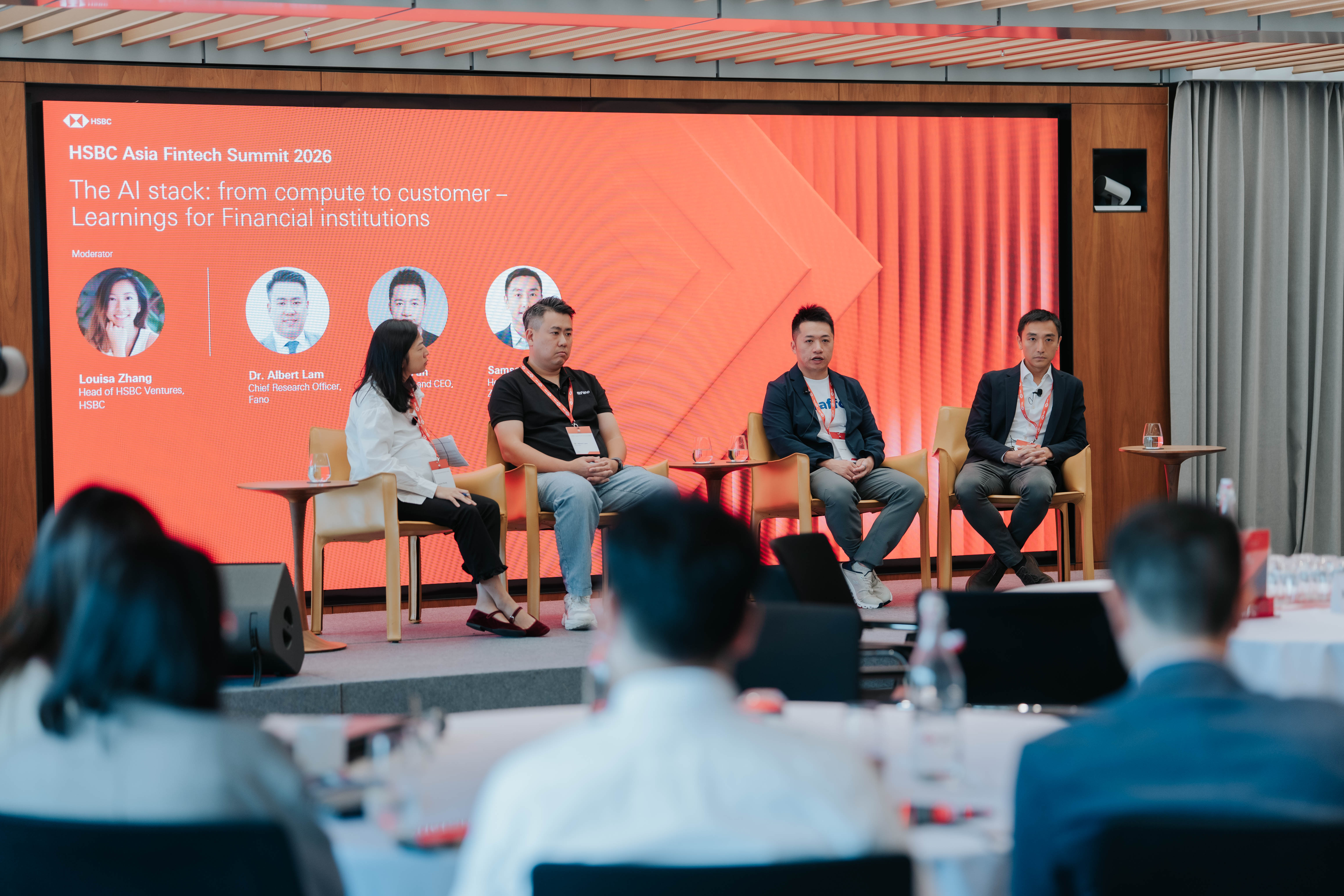
HONG KONG, August 21, 2026 — Samson C., Head of Capital Markets at Zettabyte, a global AI computing company, spoke today at HSBC's inaugural Asia Fintech Summit, held at the HSBC Main Building on Queen's Road Central. The panel, titled The AI stack: from compute to customer, traced the value chain from compute through to payments, with Samson on compute infrastructure, Fano Labs on applications and Waffo on payments and monetization.
Samson said three things have to align before a compute project moves, and any one of them can stall it. Power density in these builds exceeds traditional data center design, and grid interconnection queues now run in years rather than months. Chip allocation queues, rather than money, often decide who builds first. Capital is the third, and it requires the market to underwrite something new.
Traditional data center financing works as a real estate play, with a 25-30 year asset life, predictable depreciation, and lenders appraising the physical asset directly. GPU financing runs on 2-3 year hardware cycles, and residual value 3-5 years out is hard to underwrite, so lenders lean on offtaker credit quality and manufacturer-backed guarantees instead of the hardware.
Samson pointed to two recent developments. On August 10, 2026, NVIDIA signed memoranda of understanding with Apollo, BlackRock, Blackstone, Brookfield, Goldman Sachs and KKR to establish compute financing platforms targeting more than US$500 billion of third-party capital, and has since said it may provide residual value support for up to 25% of an opportunity, assessed project by project. The partnerships remain subject to execution of final agreements. On August 11, 2026, CME Group and Silicon Data announced plans to launch H100 and B200 rental index futures on October 5, 2026, pending regulatory review. Samson said the futures give lenders a market price for compute to underwrite against, rather than a credit structure alone.
On demand, Samson cited Gartner's forecast that worldwide AI-optimized infrastructure as a service spending will grow 96% in 2026 to reach US$42 billion, with inference spending of US$23.3 billion surpassing training spending of US$19 billion. He said efficiency gains have historically raised aggregate compute consumption rather than reduced it, because cheaper inference makes previously uneconomical use cases viable. The risk he named is a mismatch between capacity built to training-optimized specifications and growth concentrating in inference.
"A GPU does not depreciate like a building, and the residual value 3-5 years out is the figure nobody can price with confidence yet. That is what has kept debt capital cautious. Once there is a market price for compute, lenders can underwrite the asset rather than one offtaker's credit," said Samson.
The summit drew nearly 150 clients, with more than 40 corporate-investor meetings scheduled on the sidelines. Samson held four of those, with family offices, private credit firms, venture funds and digital infrastructure investors.
"This was a fintech event, and most of the investors who asked for time wanted to talk about how GPU and data center projects get funded in Asia," said Samson.